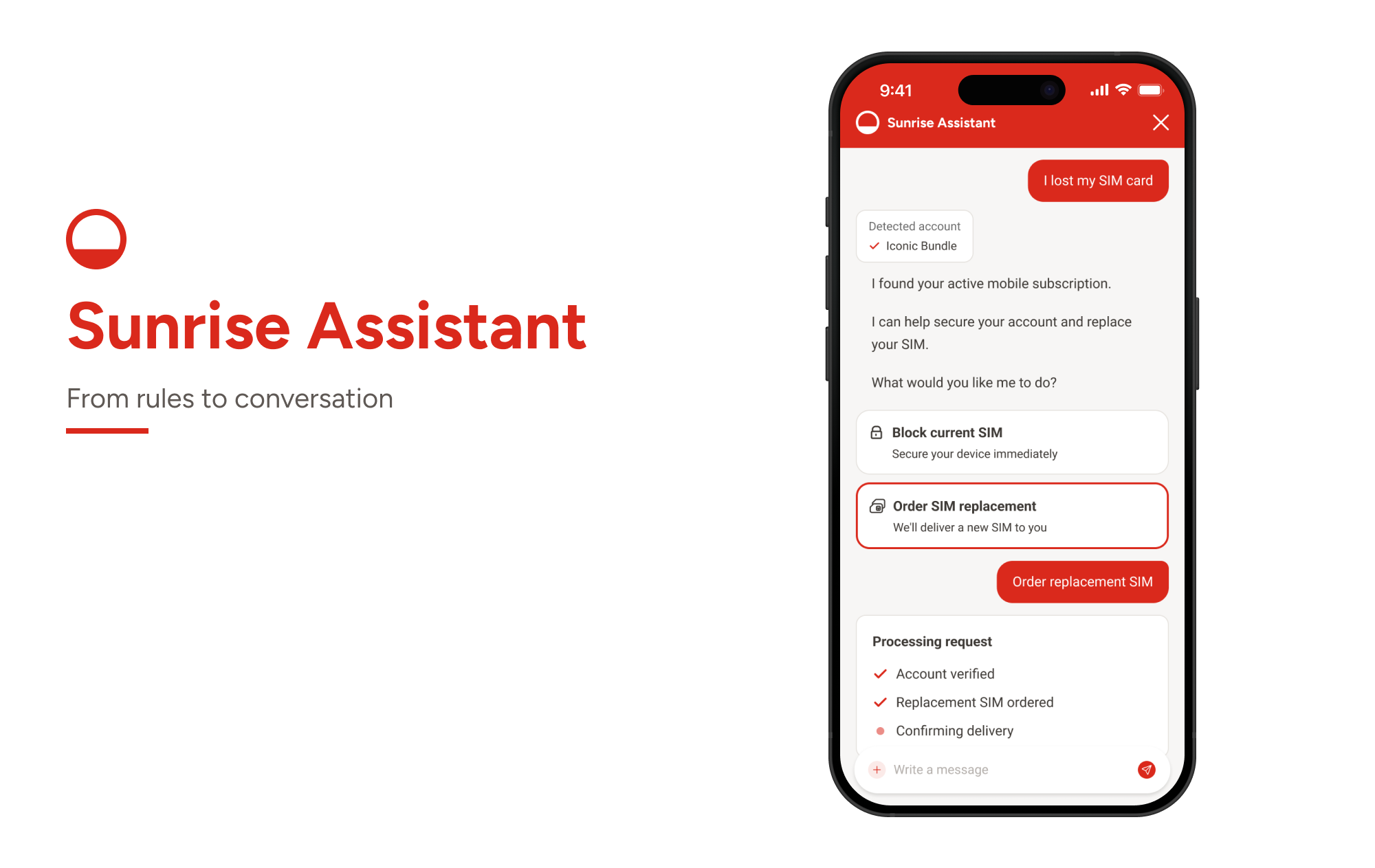
Sunrise Assistant

Onboarding logo with Home screen and dashboard screen

Role

Lead UX Designer

Focus

Conversational AI

Timeframe

2025 - 2026

Team

Product, Engineering, Customer Care

Sunrise Assistant is the digital support experience used by customers to find information, trobleshoot issues and receive assistance across Sunrise products and services.

As digital support became more important, customer expectations evolved beyond traditional chatbots. Users increasingly expected to describe problem instad of navigating predefined support flows. At the same time the advances in convesational AI created new opportinities to rewhink how support could be delivered.

Opportunity

Support had become a navigational problem rather than a conversation

The initiative originally focused on improving the chatbot experience and modernizing the interaction model.

While exploring potential solutions, I identified emerging LLM capabilities within our existing platform that could support a more conversational approach.

Rather than simply improving the exiting decision trees, this created an opportunity to rethink the support model altogether

Concept

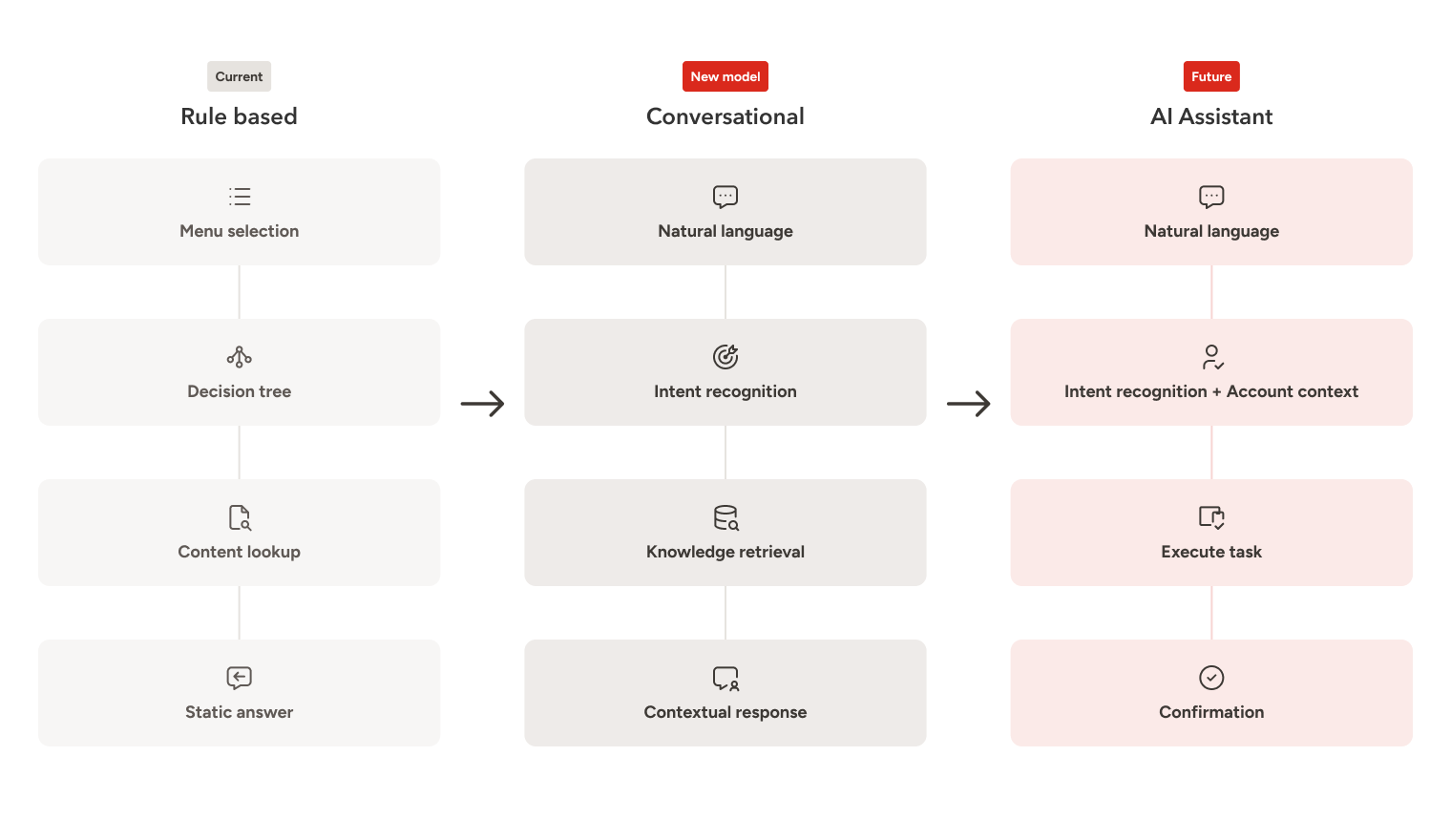
The shift required moving away from rule-based interaction and rethinking how support could work in the future.

Instead of guiding customers though predefined paths, the assistant would understand intent, retrieve relevant information, and provide contextual responses thought natural language interactions.
First time user flow for the proposed onboarding application

The support experience volved from static decision trees toward contextual assistance and future task completion.

Solution

The interaction model was redesigned around intent recognition rather than menu navigation.

Instead of guiding users thought predefined support paths, the assistant interprets request and retrieves relevant information dynamically.

The result is a more natural support experience with reduced interaction overhead.

Customers can describe problems naturally and receive contextual assistance powered by AI

Future Opportunities

While the first phase focuses on conversational support and information retrieval, the long-term solution extends beyond answering questions.

The vision is to enable customers to complete tasks directly through the assistant, reducing the need to navigate across multiple areas of the platform.

Future implementation

Outcome & Learnings

The AI support model has been validated and is currently progressing to production. More importantly, it established a foundation for a more conversational and scalable experience.

Working on this initiative reminded me that while AI technology evolves quickly, the design challenge remains the same: helping users achieve their goals with less effort.

The biggest learning was that the real opportunity was not redesigning the chatbot but rethinking its role within the customer experience.

Role

Lead UX Designer

Focus

Conversational AI

Timeframe

2025 - 2026

Team

Product, Engineering, Customer Care

Sunrise Assistant is the digital support experience used by customers to find information, trobleshoot issues and receive assistance across Sunrise products and services.

As digital support became more important, customer expectations evolved beyond traditional chatbots. Users increasingly expected to describe problem instad of navigating predefined support flows. At the same time the advances in convesational AI created new opportinities to rewhink how support could be delivered.

Opportunity

Support had become a navigational problem rather than a conversation

The initiative originally focused on improving the chatbot experience and modernizing the interaction model.

While exploring potential solutions, I identified emerging LLM capabilities within our existing platform that could support a more conversational approach.

Rather than simply improving the exiting decision trees, this created an opportunity to rethink the support model altogether

Concept

The shift required moving away from rule-based interaction and rethinking how support could work in the future.

Instead of guiding customers though predefined paths, the assistant would understand intent, retrieve relevant information, and provide contextual responses thought natural language interactions.

First time user flow for the proposed onboarding application

Solution

The interaction model was redesigned around intent recognition rather than menu navigation.

Instead of guiding users thought predefined support paths, the assistant interprets request and retrieves relevant information dynamically.

The result is a more natural support experience with reduced interaction overhead.

Customers can describe problems naturally and receive contextual assistance powered by AI

Future Opportunities

While the first phase focuses on conversational support and information retrieval, the long-term solution extends beyond answering questions.

The vision is to enable customers to complete tasks directly through the assistant, reducing the need to navigate across multiple areas of the platform.

Future implementation

Outcome & Learnings

The AI support model has been validated and is currently progressing to production. More importantly, it established a foundation for a more conversational and scalable experience.

Working on this initiative reminded me that while AI technology evolves quickly, the design challenge remains the same: helping users achieve their goals with less effort.

The biggest learning was that the real opportunity was not redesigning the chatbot but rethinking its role within the customer experience.